The content on this site may include affiliate links. As an Amazon Associate I earn from qualifying purchases. This means that, at zero cost to you, we will earn an affiliate commission if you click on one of the links and buy something.
Korean fried chicken has a way of making everyone at the table go quiet for a moment, right before the nods and happy noises start. It’s crispy in a way that defies logic, glossy with a sweet, spicy glaze, and somehow still light enough to keep you reaching for one more piece. Whether you’re pairing it with a cold drink or serving it for dinner, this is comfort food with a bit of flair. You don’t need special equipment, just a good pan, hot oil, and a few pantry staples. Let’s make the kind of chicken that stays crunchy and packs a punch.
What Makes This Special
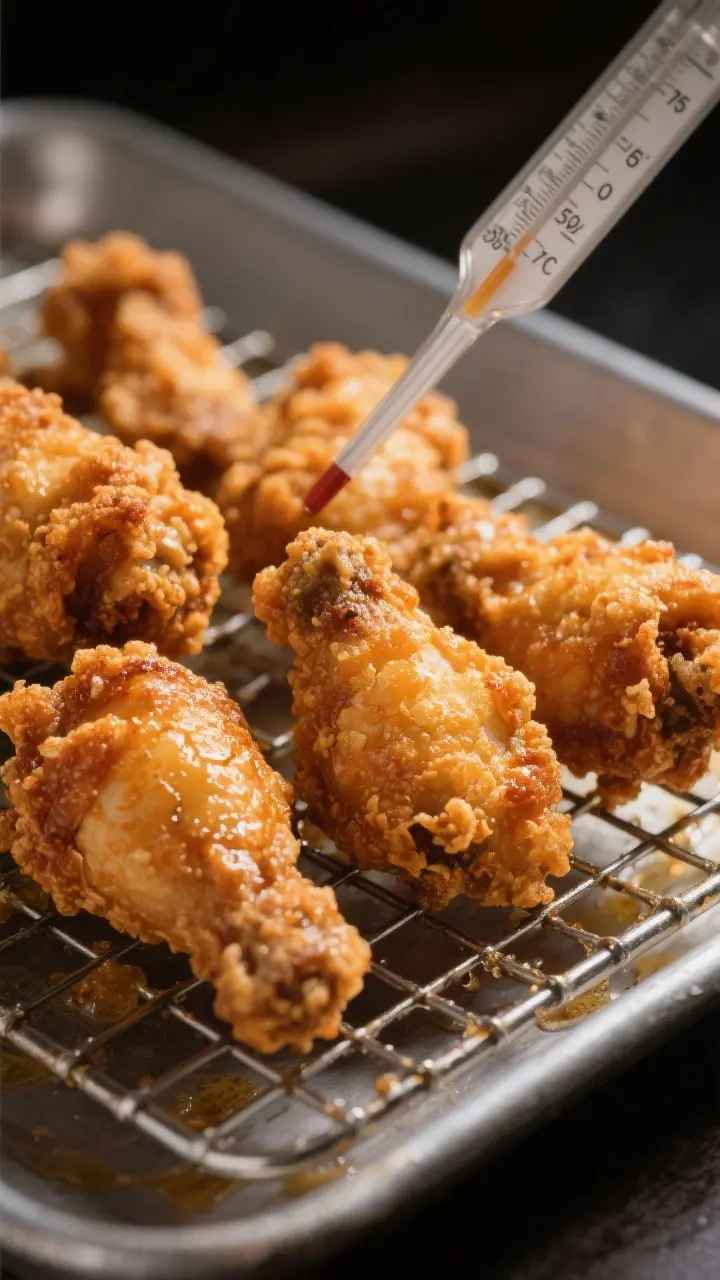
Korean fried chicken gets its legendary crunch from a simple trick: double-frying. The first fry cooks the chicken through; the second locks in the crisp exterior.
The sauce is the other secret. It’s a balanced mix of sweet, spicy, tangy, and garlicky, built on gochujang (Korean chili paste) and sometimes gochugaru (Korean chili flakes) for warmth without overwhelming heat.
Another thing to love: it’s versatile. You can toss the chicken in sauce for a sticky finish, keep it plain with a dusting of salt, or glaze it lightly for a hint of heat.
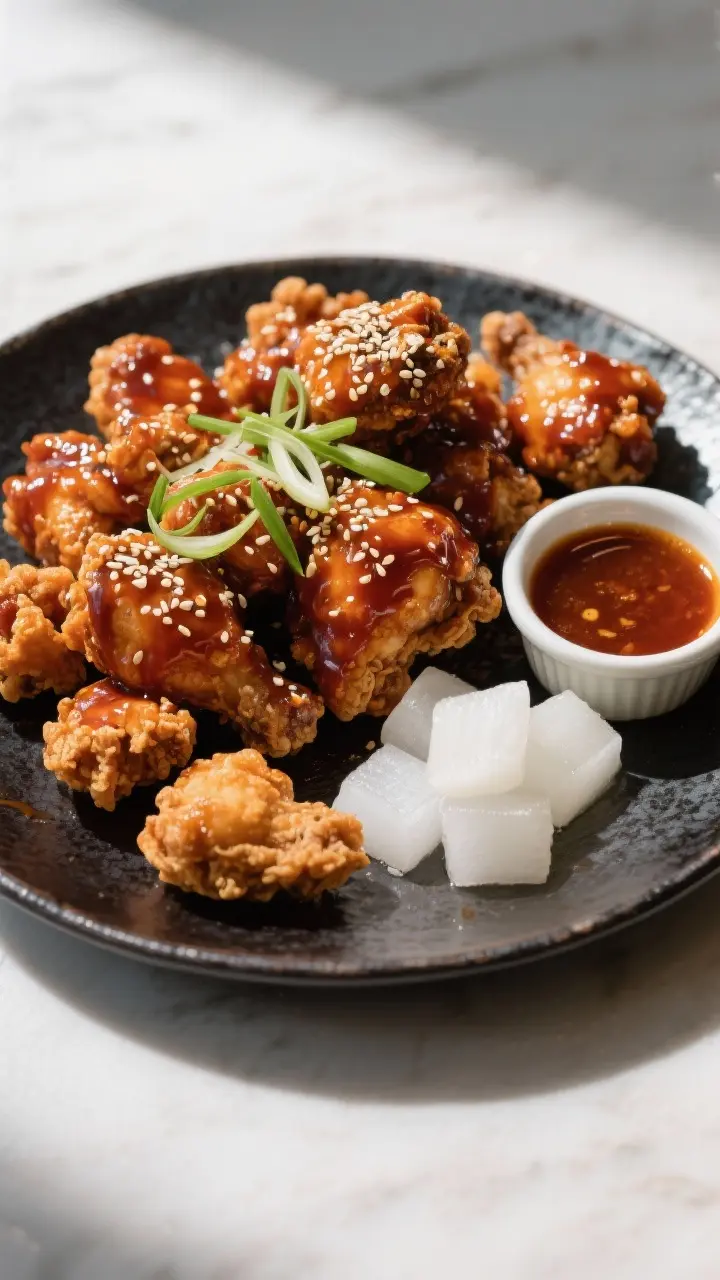
And if you want the full experience, serve it with quick pickled radish and a frosty drink.
Ingredients
- For the chicken:
- 2 pounds bone-in wings or boneless chicken thighs, cut into bite-size pieces
- 1 teaspoon kosher salt
- 1/2 teaspoon black pepper
- 1 teaspoon garlic powder
- 1 teaspoon ginger powder (or 1 tablespoon grated fresh ginger)
- 1 cup potato starch or cornstarch (potato starch gives extra crunch)
- 1/2 cup all-purpose flour (optional, for a slightly thicker crust)
- 2 large eggs, lightly beaten (optional but helps coating stick)
- Neutral oil for frying (canola, peanut, or vegetable), enough for 2–3 inches in a deep pot
- For the sauce:
- 3 tablespoons gochujang (Korean chili paste)
- 2 tablespoons soy sauce
- 3 tablespoons honey or brown sugar
- 2 tablespoons rice vinegar
- 2 cloves garlic, minced
- 1 teaspoon toasted sesame oil
- 1–2 teaspoons gochugaru (optional, for extra heat)
- 2 tablespoons water
- For finishing:
- Sesame seeds
- Sliced scallions
- Pickled radish (optional, for serving)
Instructions
- Prep the chicken. Pat the chicken dry with paper towels. Season with salt, pepper, garlic powder, and ginger. Let it sit for 10–15 minutes while you heat the oil.
- Heat the oil. Fill a heavy pot with 2–3 inches of oil and heat to 325°F (165°C).Keep a thermometer handy to maintain the temperature.
- Coat the chicken. In a bowl, whisk potato starch and flour. If using eggs, dip the chicken in egg first, then toss in the starch mixture until well coated. Shake off excess.
- First fry. Fry in batches without crowding.Cook each batch for 5–7 minutes for wings or small pieces, until pale golden and cooked through. Transfer to a wire rack to drain. Let the oil return to temperature between batches.
- Make the sauce. In a small saucepan over low heat, combine gochujang, soy sauce, honey, rice vinegar, garlic, sesame oil, gochugaru (if using), and water.Simmer for 2–3 minutes, stirring, until slightly thickened and glossy. Turn off the heat.
- Second fry. Increase oil to 350–375°F (175–190°C). Fry the chicken again for 2–3 minutes until deep golden and super crisp.Drain on the rack.
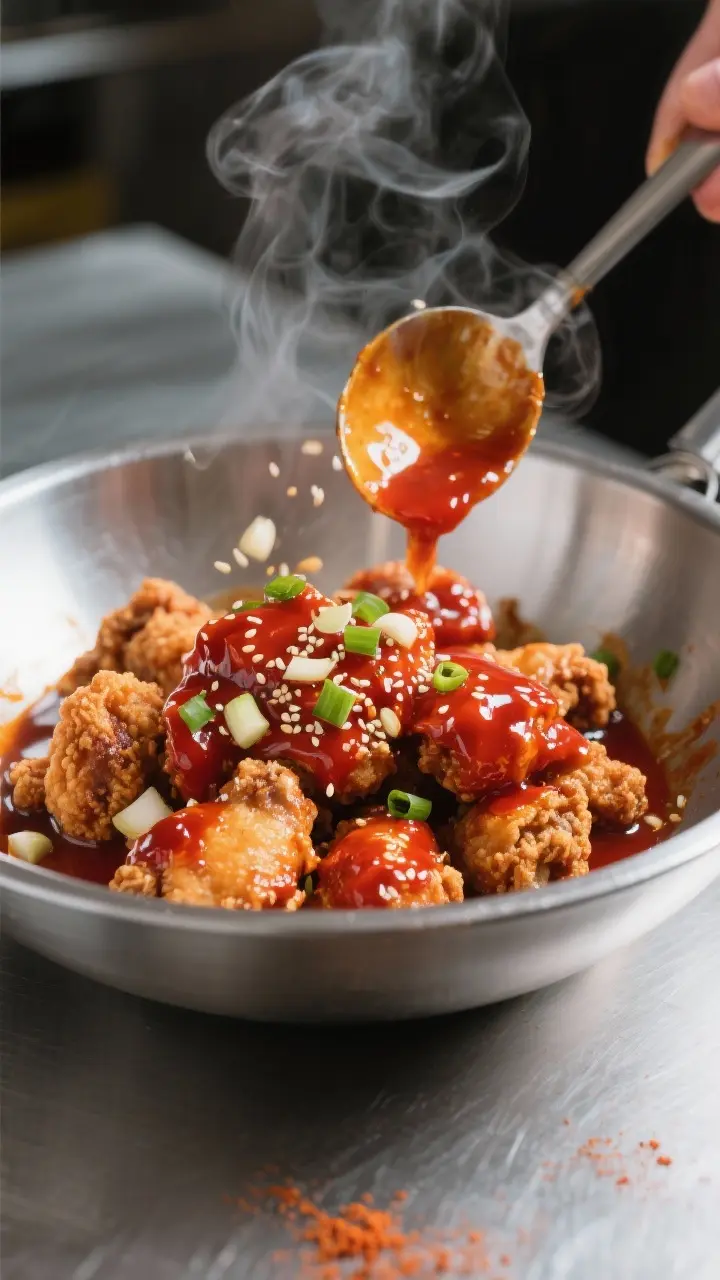
- Sauce it up. Transfer the chicken to a large bowl. Spoon sauce over the chicken and toss until coated. Use as much or as little as you like.Sprinkle with sesame seeds and scallions.
- Serve. Enjoy right away with pickled radish, a simple slaw, or steamed rice.
Storage Instructions
- Refrigerate: Store leftover chicken (sauced or unsauced) in an airtight container for up to 3 days.
- Reheat: For best results, re-crisp in a 375°F (190°C) oven or air fryer for 8–10 minutes. Microwaving will soften the crust.
- Make-ahead: You can double-fry the chicken and keep it unsauced. Cool completely, refrigerate, then reheat and toss in warm sauce just before serving.
- Freezing: Freeze unsauced, double-fried pieces on a sheet tray, then transfer to a bag for up to 2 months.Reheat from frozen at 400°F (205°C) until hot and crisp, then sauce.
Why This is Good for You
This isn’t health food, but you still get some wins. Gochujang and garlic bring antioxidants and flavor, meaning you can use less salt. Because the chicken is fried quickly at high heat, it absorbs less oil than slow frying. If you choose skinless thighs or go lighter on the sauce, you can trim the fat and sugar while keeping the taste.
Pairing with crunchy veggies, like a cabbage slaw or pickled radish, adds fiber and freshness.
It rounds out the meal and balances the richness of the chicken.
Pitfalls to Watch Out For
- Oil too cool: The coating will get soggy and greasy. Keep the thermometer in the pot and fry in small batches.
- Skipping the second fry: That extra fry is what makes it shatter-crisp. Don’t skip it.
- Overcrowding the pot: The temperature drops fast.Give the pieces space.
- Watery sauce: Let the sauce simmer until it’s glossy and slightly sticky. Too thin, and it slides off.
- Wet chicken: Moisture kills crispiness. Pat the chicken very dry before coating.
Recipe Variations
- Honey Soy Garlic: Skip the gochujang.Use soy sauce, honey, minced garlic, and a splash of rice vinegar. Mild, sweet, and kid-friendly.
- Yangnyeom Style: Extra saucy and sweet-spicy. Add ketchup (yes, really) to the gochujang sauce for a classic shop-style glaze.
- Lemon Pepper Crunch: Keep the chicken plain after frying and dust with lemon pepper and a pinch of salt.Serve with a squeeze of fresh lemon.
- Extra Hot: Add more gochugaru and a dash of chili oil. Finish with thinly sliced fresh chilies.
- Gluten-Free:</-strong> Use potato starch only, gluten-free soy sauce (tamari), and check your gochujang label. Fry as directed.
- Air Fryer Shortcut: Coat chicken lightly with oil, air fry at 380°F (193°C) for 18–22 minutes, flipping halfway.Toss in warm sauce. Not identical, but tasty and lighter.
FAQ
Can I use chicken breast?
Yes, but cut it into chunks and watch the timing so it doesn’t dry out. Thighs and wings stay juicier and are more forgiving.
What if I can’t find gochujang?
Use a mix of miso paste and chili sauce as a stand-in, or a blend of ketchup, chili paste, and a little soy sauce.
It won’t be the same, but it will still be delicious.
Do I need potato starch?
No, but it helps. Cornstarch works well too. Potato starch just gives a slightly cracklier crust.
How do I keep it crispy after saucing?
Toss the chicken in sauce right before serving and avoid drowning it.
If you like it extra saucy, serve extra on the side for dipping.
Is double-frying safe at home?
Yes, with basic precautions. Use a deep, heavy pot, monitor the temperature, don’t fill the pot too high with oil, and keep kids and pets away from the stove.
Can I bake instead of frying?
You can. Coat the chicken, spray or brush with oil, and bake at 425°F (220°C) on a wire rack set over a sheet pan for 30–40 minutes, turning once.
It won’t be as shatter-crisp, but it’s still good.
Wrapping Up
Korean fried chicken isn’t complicated, but it delivers big reward for the effort. The double-fry gives you that craveable crunch, and the gochujang sauce brings sweet heat and tang. Keep the oil hot, the batches small, and the sauce glossy, and you’ll have a plate of golden, sticky wings that disappear fast.
Serve it with pickled radish and something cold, and consider making a double batch—there rarely are leftovers.
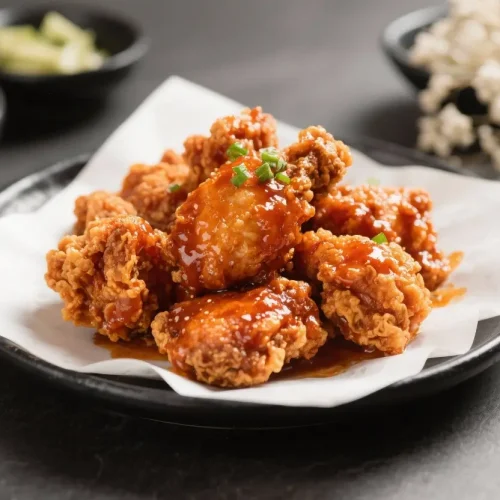
Korean Fried Chicken - Crispy, Saucy, and Seriously Satisfying
Ingredients
- For the chicken:
- 2 pounds bone-in wings or boneless chicken thighs, cut into bite-size pieces
- 1 teaspoon kosher salt
- 1/2 teaspoon black pepper
- 1 teaspoon garlic powder
- 1 teaspoon ginger powder (or 1 tablespoon grated fresh ginger)
- 1 cup potato starch or cornstarch (potato starch gives extra crunch)
- 1/2 cup all-purpose flour (optional, for a slightly thicker crust)
- 2 large eggs, lightly beaten (optional but helps coating stick)
- Neutral oil for frying (canola, peanut, or vegetable), enough for 2–3 inches in a deep pot
- For the sauce:
- 3 tablespoons gochujang (Korean chili paste)
- 2 tablespoons soy sauce
- 3 tablespoons honey or brown sugar
- 2 tablespoons rice vinegar
- 2 cloves garlic, minced
- 1 teaspoon toasted sesame oil
- 1–2 teaspoons gochugaru (optional, for extra heat)
- 2 tablespoons water
- For finishing:
- Sesame seeds
- Sliced scallions
- Pickled radish (optional, for serving)
Instructions
- Prep the chicken. Pat the chicken dry with paper towels. Season with salt, pepper, garlic powder, and ginger. Let it sit for 10–15 minutes while you heat the oil.
- Heat the oil. Fill a heavy pot with 2–3 inches of oil and heat to 325°F (165°C). Keep a thermometer handy to maintain the temperature.
- Coat the chicken. In a bowl, whisk potato starch and flour. If using eggs, dip the chicken in egg first, then toss in the starch mixture until well coated. Shake off excess.
- First fry. Fry in batches without crowding. Cook each batch for 5–7 minutes for wings or small pieces, until pale golden and cooked through. Transfer to a wire rack to drain. Let the oil return to temperature between batches.
- Make the sauce. In a small saucepan over low heat, combine gochujang, soy sauce, honey, rice vinegar, garlic, sesame oil, gochugaru (if using), and water. Simmer for 2–3 minutes, stirring, until slightly thickened and glossy. Turn off the heat.
- Second fry. Increase oil to 350–375°F (175–190°C). Fry the chicken again for 2–3 minutes until deep golden and super crisp. Drain on the rack.
- Sauce it up. Transfer the chicken to a large bowl. Spoon sauce over the chicken and toss until coated. Use as much or as little as you like. Sprinkle with sesame seeds and scallions.
- Serve. Enjoy right away with pickled radish, a simple slaw, or steamed rice.
Printable Recipe Card
Want just the essential recipe details without scrolling through the article? Get our printable recipe card with just the ingredients and instructions.