The content on this site may include affiliate links. As an Amazon Associate I earn from qualifying purchases. This means that, at zero cost to you, we will earn an affiliate commission if you click on one of the links and buy something.
Kung Pao Chicken is bold, punchy, and surprisingly straightforward to make at home. You get juicy chicken, crunchy peanuts, and a glossy, spicy-sweet sauce that clings to every bite. It’s fast, flexible, and comes together in one pan. If you love takeout, this version gives you the same excitement with fresher flavor and control over the heat. Serve it with steamed rice, and you’ve got a complete meal in under 30 minutes.
What Makes This Recipe So Good
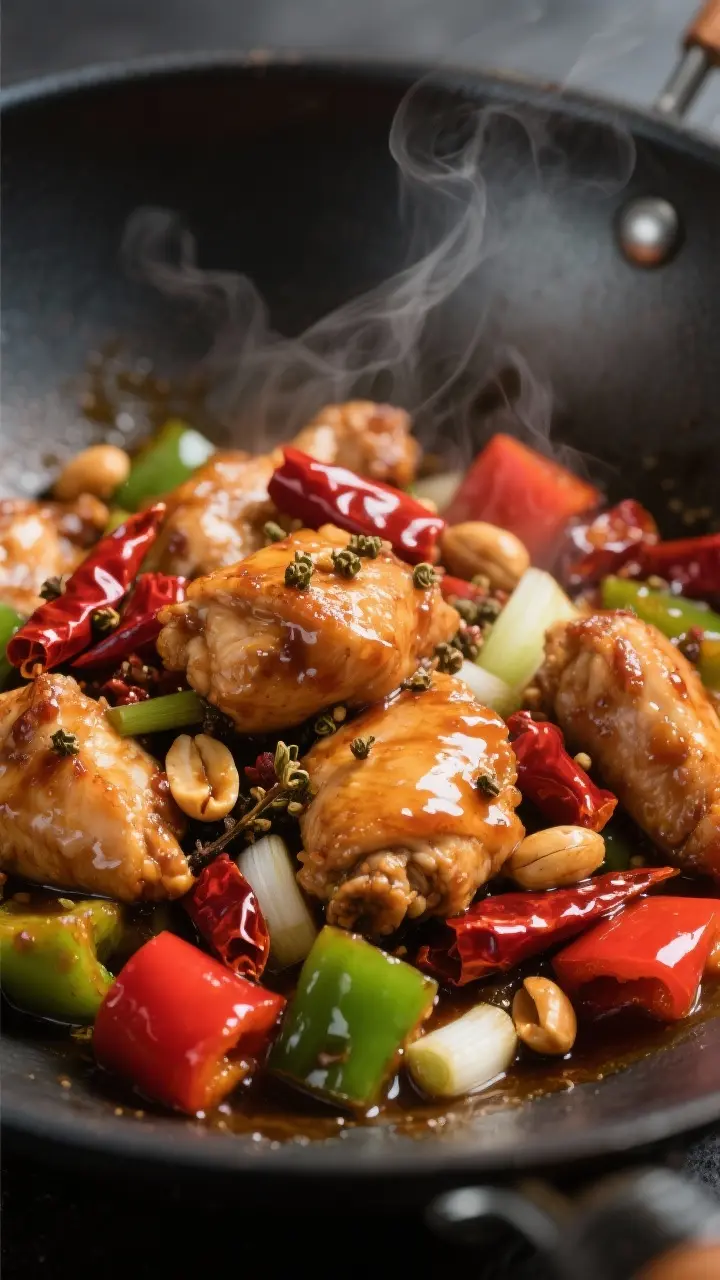
- Balanced flavors: A mix of savory soy, gentle sweetness, and a vinegary tang, with just the right heat from dried chilies.
- Great texture: Tender, marinated chicken contrasts with crisp bell peppers and crunchy roasted peanuts.
- Quick and doable: Most of the time is spent prepping. The actual cooking is fast and simple.
- Flexible heat: You control the spice level by adjusting chilies and chili oil.
- Better than takeout: Fresher ingredients and no mystery sauces, plus you can make it gluten-free if needed.
What You’ll Need
- Chicken: 1 pound boneless, skinless chicken thighs (or breast), cut into small bite-size pieces.
- Marinade:
- 1 tablespoon light soy sauce
- 1 tablespoon Shaoxing wine (or dry sherry)
- 1 teaspoon cornstarch
- 1 teaspoon neutral oil (canola or peanut)
- Aromatics:
- 3 cloves garlic, minced
- 1 tablespoon fresh ginger, minced
- 4–6 dried red chilies (facing heaven or arbol), left whole
- 2–3 scallions, white and green parts separated, sliced
- 1 teaspoon Sichuan peppercorns, lightly crushed (optional but traditional)
- Vegetables:
- 1 small red bell pepper, diced
- 1 small green bell pepper, diced
- Peanuts: 1/2 cup roasted, unsalted peanuts
- Sauce:
- 2 tablespoons light soy sauce
- 1 tablespoon dark soy sauce (for color and depth)
- 1 tablespoon Chinkiang black vinegar (or rice vinegar)
- 1 tablespoon sugar (or 1½ tablespoons if you prefer sweeter)
- 1 tablespoon hoisin sauce (optional for extra body)
- 1/2 cup low-sodium chicken stock or water
- 2 teaspoons cornstarch
- 1–2 teaspoons chili oil (optional, for extra heat)
- Oil for cooking: 2 tablespoons neutral oil
- To serve: Steamed jasmine rice
Step-by-Step Instructions
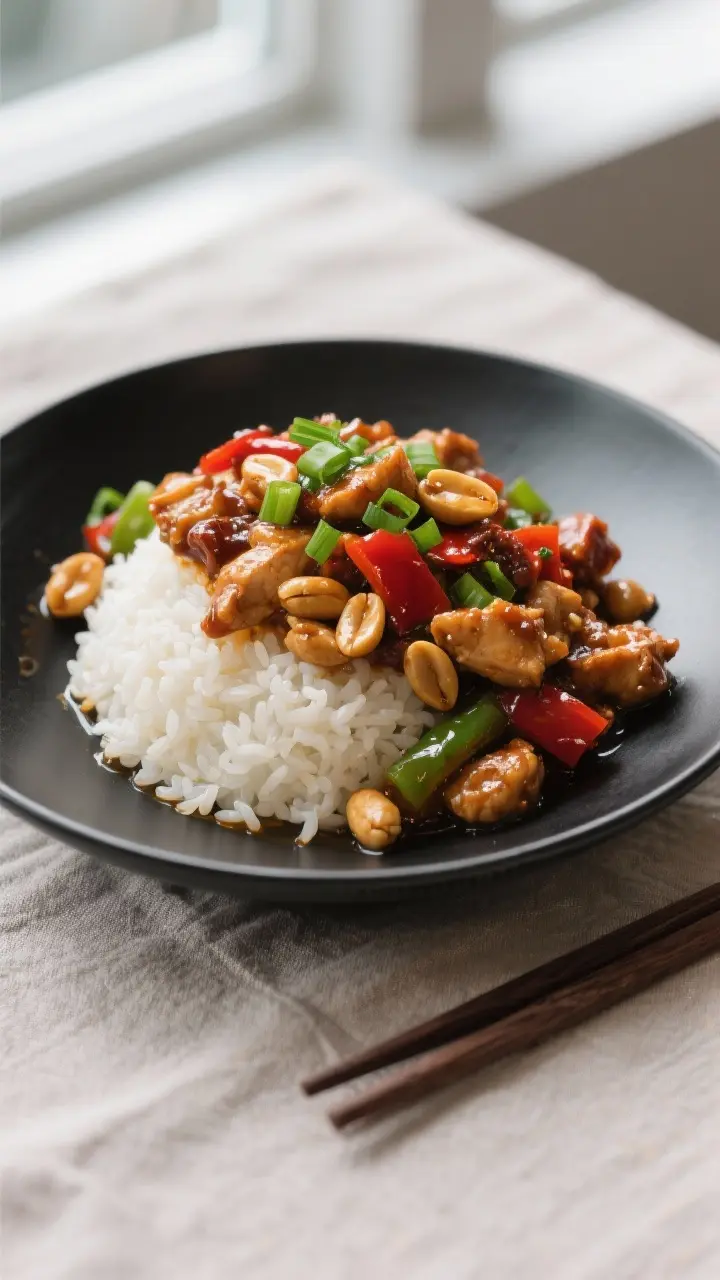
- Marinate the chicken: In a bowl, mix soy sauce, Shaoxing wine, cornstarch, and oil.Toss in the chicken. Let it sit for 15 minutes while you prep everything else.
- Make the sauce: In a small bowl, whisk light soy, dark soy, vinegar, sugar, hoisin (if using), stock, cornstarch, and chili oil. Stir until smooth.Set aside.
- Prep the aromatics: Mince the garlic and ginger. Slice the scallions, separating whites and greens. Lightly crush the Sichuan peppercorns in a mortar or with the flat of a knife.
- Heat the wok: Set a wok or large skillet over medium-high heat.Add 1 tablespoon oil. When shimmering, add the peanuts. Stir-fry 30–45 seconds until fragrant, then remove to a bowl.
Don’t burn them.
- Sear the chicken: Add the remaining oil. Spread the chicken in one layer. Let it sear undisturbed for 45–60 seconds, then stir-fry until just cooked through, 3–4 minutes.Transfer to a plate.
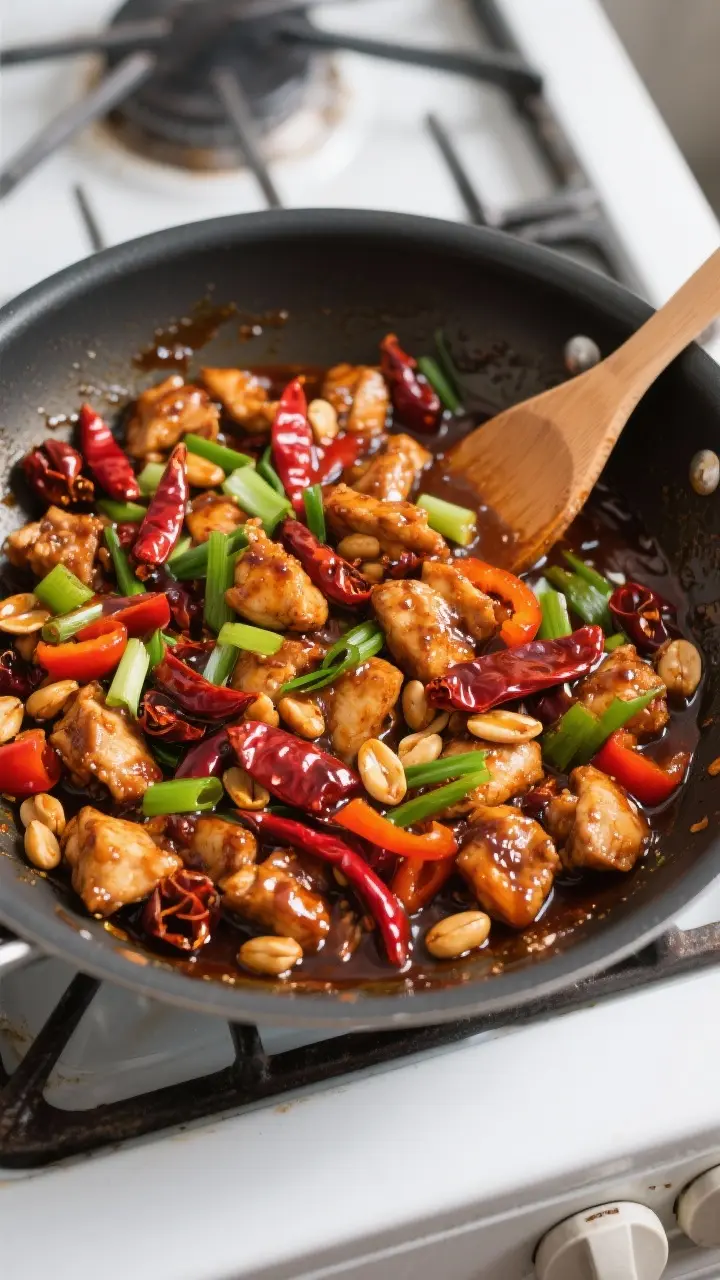
- Bloom the spices: In the same pan, add dried chilies and Sichuan peppercorns. Stir-fry 20–30 seconds until the chilies darken slightly and smell toasty. Add garlic, ginger, and scallion whites.Cook 30 seconds.
- Add vegetables: Toss in the bell peppers. Stir-fry 1–2 minutes until crisp-tender. You want them bright and slightly crunchy.
- Combine: Return the chicken to the pan.Stir the sauce and pour it in. Cook, stirring, until the sauce thickens and coats everything, 1–2 minutes.
- Finish: Stir in the roasted peanuts and most of the scallion greens. Taste and adjust seasoning—add a splash of soy for salt, vinegar for brightness, or sugar if it needs rounding out.
- Serve: Plate immediately over steamed rice.Garnish with the remaining scallion greens.
How to Store
- Fridge: Cool completely, then store in an airtight container for up to 3 days.
- Reheat: Warm in a skillet over medium heat with a splash of water to loosen the sauce. Avoid microwaving peanuts too long—they can turn soft.
- Freezer: Not ideal because peppers and peanuts lose crunch, but you can freeze for up to 2 months. Thaw overnight in the fridge and reheat gently.
Why This Is Good for You
- Protein-rich: Chicken provides lean protein to keep you satisfied.
- Healthy fats: Peanuts add monounsaturated fats and a bit of fiber.
- Micronutrients: Bell peppers deliver vitamin C and antioxidants.
- Manageable sodium: Using low-sodium soy and stock keeps the salt in check.
- Customizable heat: Capsaicin from chilies can boost metabolism and add zing.
Pitfalls to Watch Out For
- Overcrowding the pan: Too much chicken at once will steam instead of sear.Cook in two batches if needed.
- Burning the chilies: They go from fragrant to bitter quickly. Keep heat controlled and stir constantly.
- Skipping the marinade: The cornstarch and wine help tenderize and protect the chicken during high-heat cooking.
- Not stirring the sauce before adding: Cornstarch settles. Give it a quick stir or your sauce won’t thicken evenly.
- Overcooking the peppers: Soft peppers make the dish flat.Keep them crisp for contrast.
Alternatives
- Protein swaps: Try shrimp, tofu (extra-firm, pressed), or pork tenderloin. Adjust cook times accordingly.
- Nut options: Cashews or almonds work if you don’t have peanuts. For nut-free, use toasted pumpkin seeds for crunch.
- Gluten-free: Use tamari or certified gluten-free soy sauce, and check your hoisin and vinegar labels.
- No alcohol: Replace Shaoxing wine with extra stock plus 1/2 teaspoon rice vinegar.
- Vegetable add-ins: Snap peas, celery, zucchini, or mushrooms fit well.Keep the total volume similar so the sauce stays balanced.
- Spice control: Reduce dried chilies and skip the chili oil for mild; add more and include a pinch of red pepper flakes for extra heat.
FAQ
What is Kung Pao Chicken, exactly?
Kung Pao Chicken is a classic Sichuan dish known for its savory, slightly sweet, and tangy sauce, with a gentle numbing heat from Sichuan peppercorns and dried chilies. It typically includes chicken, peanuts, and peppers.
Can I make it without Sichuan peppercorns?
Yes. You’ll miss the signature tingling effect, but the dish will still be delicious.
Add a little extra chili oil or a touch more vinegar to keep the flavor lively.
What’s the best cut of chicken for this?
Thighs are more forgiving and stay juicy. Breast works too—just avoid overcooking and keep the pieces small and uniform.
How spicy is this recipe?
Medium by default. Use fewer dried chilies and skip chili oil for mild, or increase both for more heat.
Leaving the chilies whole keeps the spice more controlled.
Do I need a wok?
A wok is great for high heat and fast stir-frying, but a large, heavy skillet works just fine. The key is preheating and not overcrowding.
Can I make it ahead?
You can marinate the chicken and mix the sauce up to a day ahead. Cook right before serving to keep the peanuts crunchy and the peppers crisp.
What should I serve with it?
Steamed jasmine rice is classic.
Brown rice or cauliflower rice works too. A simple cucumber salad on the side is refreshing.
Why use both light and dark soy sauce?
Light soy adds salt and brightness, while dark soy provides color and a deeper, slightly molasses-like note. Together, they balance the sauce.
My sauce turned gummy—what happened?
Too much cornstarch or over-reducing can make it gloppy.
Measure carefully, stir the sauce before adding, and pull it off the heat once it coats the chicken.
Is this similar to the Americanized version?
Yes and no. The core idea is the same, but this leans closer to the classic style—less sugary, more balance, and that optional Sichuan pepper tingle.
Wrapping Up
Kung Pao Chicken is weeknight-friendly, full of personality, and endlessly adaptable. With a quick marinade, a well-mixed sauce, and a hot pan, you can get big takeout flavor at home.
Keep the peppers crisp, mind the chilies, and finish with a handful of peanuts. Serve it hot over rice, and enjoy a fast, satisfying meal that never gets old.
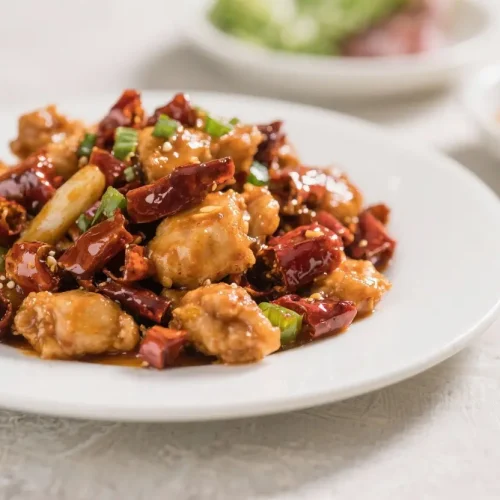
Kung Pao Chicken - Spicy, Savory, and Perfect for Weeknights
Ingredients
- Chicken: 1 pound boneless, skinless chicken thighs (or breast), cut into small bite-size pieces.
- Marinade: 1 tablespoon light soy sauce
- 1 tablespoon Shaoxing wine (or dry sherry)
- 1 teaspoon cornstarch
- 1 teaspoon neutral oil (canola or peanut)
- Aromatics: 3 cloves garlic, minced
- 1 tablespoon fresh ginger, minced
- 4–6 dried red chilies (facing heaven or arbol), left whole
- 2–3 scallions, white and green parts separated, sliced
- 1 teaspoon Sichuan peppercorns, lightly crushed (optional but traditional)
- Vegetables: 1 small red bell pepper, diced
- 1 small green bell pepper, diced
- Peanuts: 1/2 cup roasted, unsalted peanuts
- Sauce: 2 tablespoons light soy sauce
- 1 tablespoon dark soy sauce (for color and depth)
- 1 tablespoon Chinkiang black vinegar (or rice vinegar)
- 1 tablespoon sugar (or 1½ tablespoons if you prefer sweeter)
- 1 tablespoon hoisin sauce (optional for extra body)
- 1/2 cup low-sodium chicken stock or water
- 2 teaspoons cornstarch
- 1–2 teaspoons chili oil (optional, for extra heat)
- Oil for cooking: 2 tablespoons neutral oil
- To serve: Steamed jasmine rice
Instructions
- Marinate the chicken: In a bowl, mix soy sauce, Shaoxing wine, cornstarch, and oil. Toss in the chicken. Let it sit for 15 minutes while you prep everything else.
- Make the sauce: In a small bowl, whisk light soy, dark soy, vinegar, sugar, hoisin (if using), stock, cornstarch, and chili oil. Stir until smooth. Set aside.
- Prep the aromatics: Mince the garlic and ginger. Slice the scallions, separating whites and greens. Lightly crush the Sichuan peppercorns in a mortar or with the flat of a knife.
- Heat the wok: Set a wok or large skillet over medium-high heat. Add 1 tablespoon oil. When shimmering, add the peanuts. Stir-fry 30–45 seconds until fragrant, then remove to a bowl. Don’t burn them.
- Sear the chicken: Add the remaining oil. Spread the chicken in one layer. Let it sear undisturbed for 45–60 seconds, then stir-fry until just cooked through, 3–4 minutes. Transfer to a plate.
- Bloom the spices: In the same pan, add dried chilies and Sichuan peppercorns. Stir-fry 20–30 seconds until the chilies darken slightly and smell toasty. Add garlic, ginger, and scallion whites. Cook 30 seconds.
- Add vegetables: Toss in the bell peppers. Stir-fry 1–2 minutes until crisp-tender. You want them bright and slightly crunchy.
- Combine: Return the chicken to the pan. Stir the sauce and pour it in. Cook, stirring, until the sauce thickens and coats everything, 1–2 minutes.
- Finish: Stir in the roasted peanuts and most of the scallion greens. Taste and adjust seasoning—add a splash of soy for salt, vinegar for brightness, or sugar if it needs rounding out.
- Serve: Plate immediately over steamed rice. Garnish with the remaining scallion greens.
Printable Recipe Card
Want just the essential recipe details without scrolling through the article? Get our printable recipe card with just the ingredients and instructions.